MEETING AGENDA
Please click on “MEETING AGENDA”

Please click on “MEETING AGENDA”



Lycoming Regional Police Department (LRPD), legal successor to the Tiadaghton Valley Regional Police Department invites residents to sign up for LRPD’s Crime Watch notifications. To enroll follow directions below:
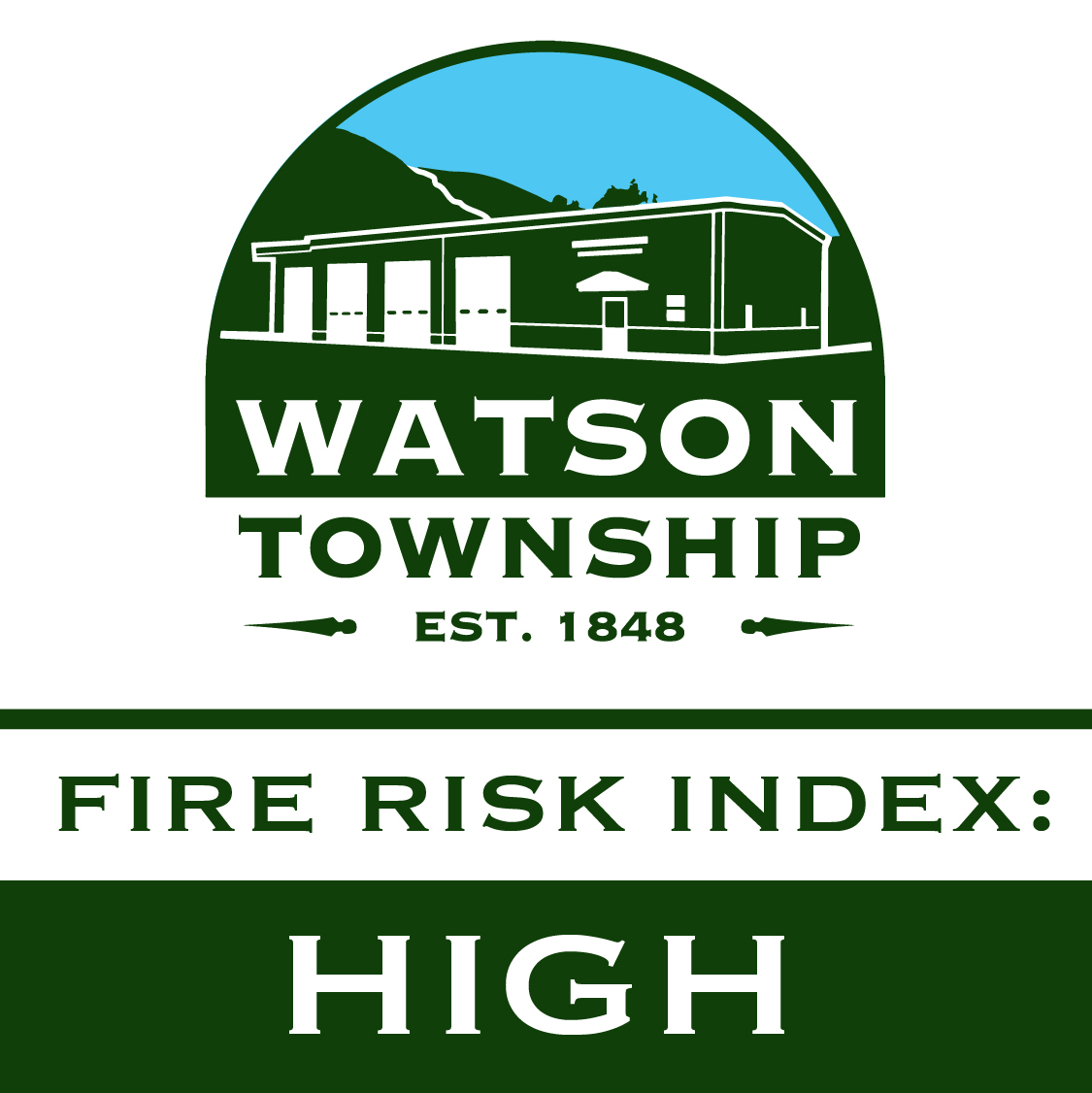
NOTICE: The currently posted fire risk level is ONLY updated when the level changes.
Fire Danger is expressed using these levels
LOW – Fuels do not ignite readily from small firebrands although a more intense heat source, such as lightning, may start fires in duff or light fuels.
MODERATE – Fires can start from most accidental causes, but with the exception of lightning fires in some areas, the number of starts is generally low.
HIGH – All fine dead fuels ignite readily and fires start easily from most causes.
VERY HIGH – Fires start easily from all causes and, immediately after ignition, spread rapidly and increase quickly in intensity.
EXTREME – Fires start quickly, spread furiously, and burn intensely. All fires are potentially serious.
The greatest danger of wildfires in Pennsylvania occurs during the spring months of March, April, and May, and the autumn months of October and November. In Pennsylvania, 99 percent of all wildfires are caused by people.
Certain conditions are necessary for a wildfire to occur:
The first two factors occur most frequently in Pennsylvania during spring and autumn. As the spring sun climbs higher in the sky, days become longer and warmer.
The trees are bare during this time, allowing sunlight to reach the forest floor, warming the ground, and drying surface fuels.
Coupled with strong and dry spring winds, this leads to a tremendous amount of combustible fuels.
During autumn, leaves turn color and begin to fall, accumulating in a deep, fluffy layer that creates a fire hazard.
The third factor, an ignition source, also frequently occurs during these periods.
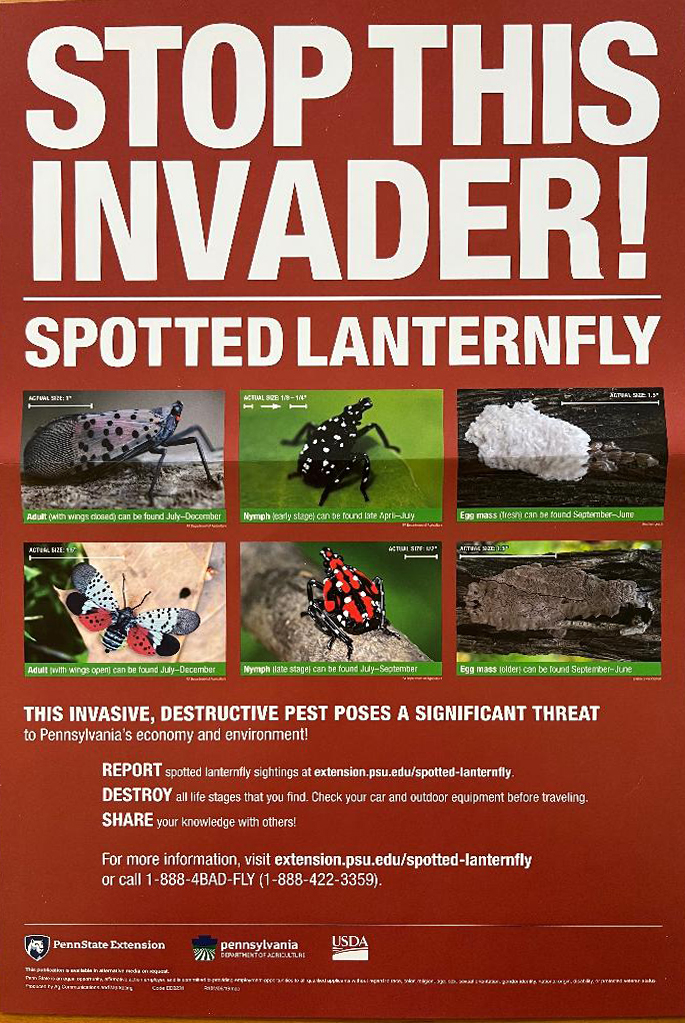
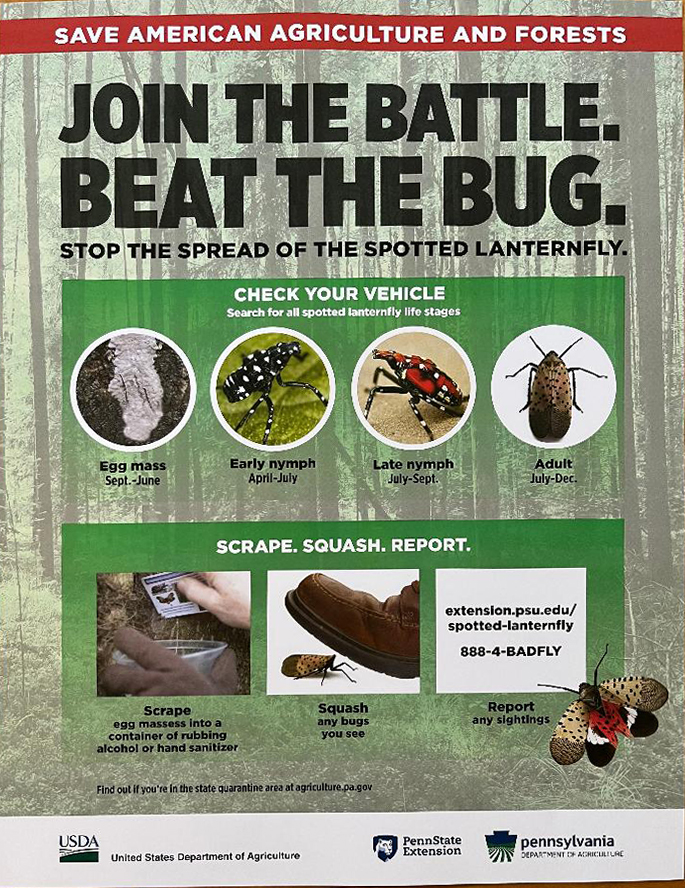
THIS INVASIVE, DESTRUCTIVE PEST POSES A SIGNIFICANT THREAT to Pennsylvania’s economy and environment!
REPORT spotted lanternfly sightings at extension.psu.edu/spotted-lanternfly.
DESTROY all life stages that you find. Check your car and outdoor equipment before traveling
SHARE your knowledge with others!